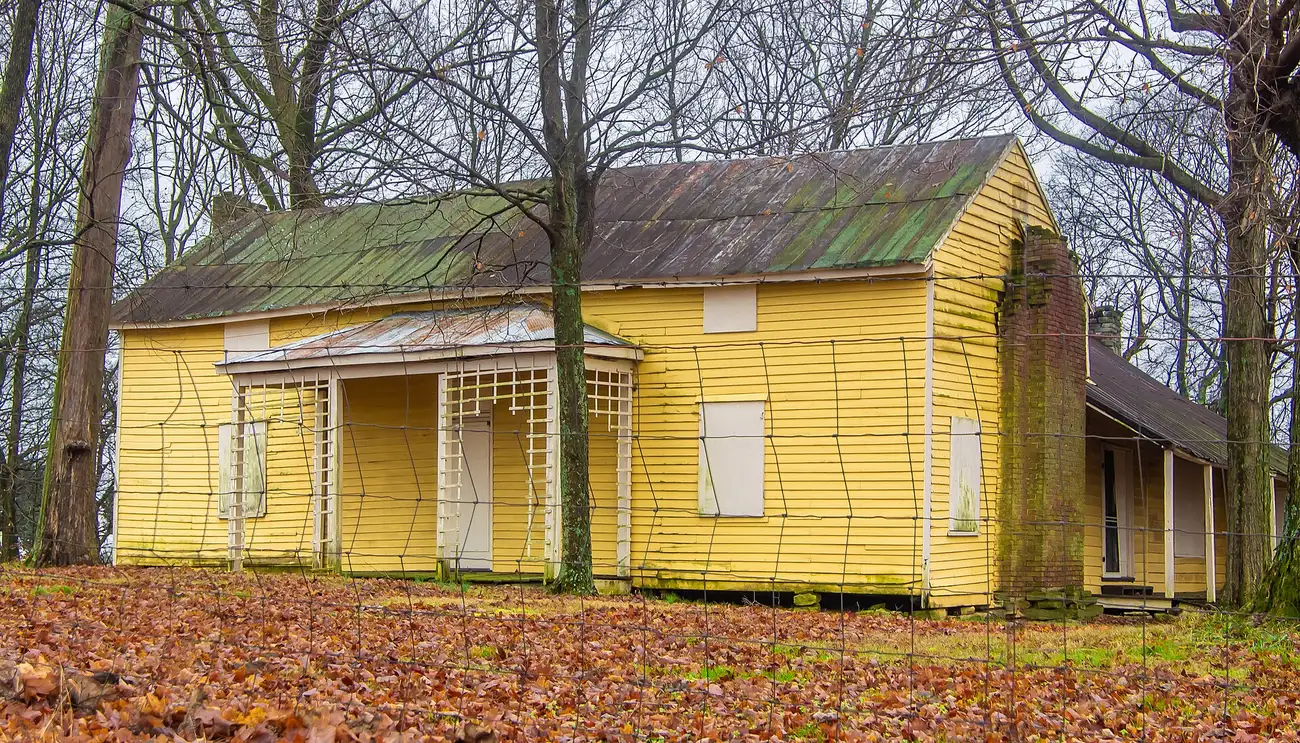
Mount Juliet formed in 1835 and became a city in 1972. Four places are on the National Register, from the 1791 John Cloyd House to a 1905 stone wall.
Last checked Oct. 17, 2026. Facts on this page come from the City of Mt. Juliet’s Hibbett Hall and Welcome Center and General Store Museum pages, the Lebanon-Wilson County Chamber of Commerce’s introduction to Mt. Juliet, and the National Park Service’s National Register of Historic Places records on NPGallery. City of Mt. Juliet: 615-754-2552.
Mount Juliet formed as a community in 1835 and was incorporated as a city in 1972, according to the Lebanon-Wilson County Chamber of Commerce; the city’s own history museum also dates the incorporation to 1972, with N.C. Hibbett as the first mayor in 1973. Today four places in Mount Juliet are on the National Register of Historic Places, and the city runs two small history museums.
Who to call
- History museums and Veterans Wall: Mt. Juliet Parks and Recreation, 615-758-6522
- General Store Museum and Welcome Center: City of Mt. Juliet, 615-754-2552
- City historian: Luke Winchester, appointed by the Board of Commissioners; contact through City Hall
How Mount Juliet got its name
The Lebanon-Wilson County Chamber, citing the Mt. Juliet Chamber of Commerce, gives two possible explanations. The most widely accepted is that the town is named for the Mount Juliet estate, a manor house in County Kilkenny, Ireland. The other credits Julia Gleaves, a woman known for caring for people in need in the community. The chamber says Mount Juliet is the only U.S. city with the name.
Mt. or Mount? The official city charter lists the name as Mt. Juliet; the U.S. Postal Service lists it as Mount Juliet.
A railroad town
The city’s Hibbett Hall museum tells the story of a town where, in its words, “passing train cars could have outnumbered local citizens on any given day.” Its model railroad recreates Mount Juliet in the 1910s to 1940s, using the train collection of N.C. Hibbett, an avid collector. The rails still matter: Mount Juliet has a station on WeGo Star, the commuter line to downtown Nashville. See getting around.
National Register of Historic Places
Four Mount Juliet listings, from the National Park Service’s records:
| Property | Where | Listed | Why it matters (NPS) |
|---|---|---|---|
| John Cloyd House | Northwest of Mount Juliet on U.S. 70 | Oct. 1, 1974 | Exploration and settlement, architecture; significant year 1791 |
| Warner Price Mumford Smith House | 10277 Lebanon Road | July 22, 1993 | Greek Revival architecture; built 1853 |
| Chandler Stone Wall | Old Lebanon Dirt Road, about 2 miles west of Mt. Juliet Road | July 19, 2001 | Agriculture, engineering and conservation; built by John David Chandler, significant year 1905 |
| Cedar Heights Farmhouse | 704 Taylor Lane | May 10, 2024 | Listed on the NPS weekly list |
A National Register listing does not make a property open to the public; check before you visit.
Museums and memorials you can visit
- N.C. Hibbett Hall Train and History Museum, in Charlie Daniels Park, 1075 Charlie Daniels Parkway. Established in 2023. Free. Open 2 to 4 p.m. on the second and fourth Saturdays of the month, or by appointment; this fall’s dates are Oct. 24 and Nov. 14 and 28. Exhibits cover the city’s 1972 incorporation and its railroad years.
- Welcome Center and General Store Museum (Corley and Sons General Store), 50 E. Hill St. Open 24 hours. Fred Corley’s collection of more than 50 years of local artifacts: store signs, cameras, groceries, a Pepsi machine, a cash register and a phone booth.
- Mt. Juliet Veterans Wall: names of veterans with a connection to Mount Juliet. New names are added each August.
- Veterans Park and the clock tower, 22 E. Division St., near the train depot, where the city holds its Christmas tree lighting.
The county seat next door
Wilson County’s government has been in Lebanon, about nine miles east, since 1801. The Tennessee Encyclopedia notes the county was named for Maj. David Wilson, a North Carolina hero of the American Revolution, and lists Mt. Juliet among the county’s towns and villages.
What this means for you
- Hibbett Hall is the easiest way into local history; it is free and opens two Saturdays a month.
- The General Store Museum never closes.
- Check access before visiting a National Register property.
Related: population and growth, things to do this month and parks and trails.
Frequently asked questions
When was Mount Juliet founded?
The community formed in 1835 and was incorporated as a city in 1972, according to the Lebanon-Wilson County Chamber of Commerce and the City of Mt. Juliet. N.C. Hibbett was the first mayor, in 1973.
How did Mount Juliet get its name?
The most widely accepted story, as the Lebanon-Wilson County Chamber tells it, is that it was named for the Mount Juliet estate, a manor house in County Kilkenny, Ireland. Another theory credits Julia Gleaves, known for caring for people in need.
Is it Mt. Juliet or Mount Juliet?
The city charter uses Mt. Juliet; the U.S. Postal Service lists the name as Mount Juliet. Both are used locally.
What historic places are in Mount Juliet?
Four National Register of Historic Places listings: the John Cloyd House (listed 1974), the Warner Price Mumford Smith House (1993), the Chandler Stone Wall (2001) and the Cedar Heights Farmhouse (2024).
Is there a museum in Mount Juliet?
Yes. The city’s free Hibbett Hall Train and History Museum in Charlie Daniels Park opens 2 to 4 p.m. on the second and fourth Saturdays, and the General Store Museum at 50 E. Hill St. is open 24 hours.
Have your say